At the High End, Personal Beats Automated
A guest sends a message at nine at night. They are not asking whether the dates are open. They are explaining that six women, friends since college, want a place for a long weekend where they can cook together, sit outside late, and not feel like they are in a rental.
Two operators read that same message.
One sees an availability question and fires back the template: rates, check-in time, the house rules link. Fast, clean, done. The other reads what is actually being asked, which is not about a calendar at all. It is a question about whether the place will hold the weekend they are imagining. The first operator answers in eight seconds. The second answers in eight minutes. The gap between those two replies is the whole business.
The Reply Is Part of the Product
Most operators treat the guest message as overhead. Something to clear off the list, ideally without a human touching it. So the tooling gets pointed at speed and volume, and the answer becomes a template that fits everyone and lands on no one.
That works at the bottom of the market. A guest booking a cheap room for one night wants a bed, a door code, and silence. The template is the correct product.
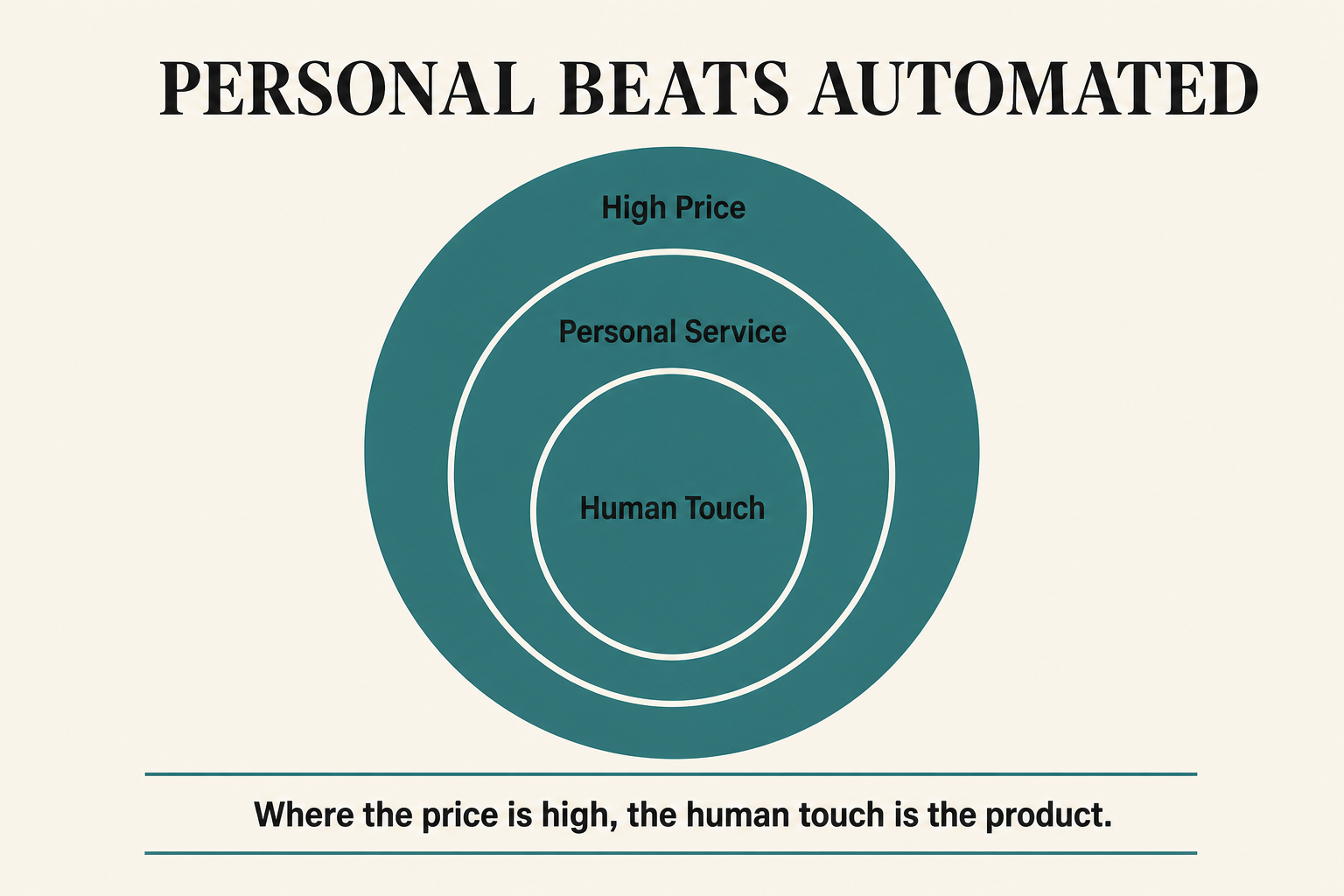
At the high end the logic inverts. A premium guest is not buying a bed count. They are buying confidence that the weekend will go the way they pictured it, and they are quietly checking whether a real person stands behind the property. The template tells them no one does. It answers the question they typed and ignores the question they meant.
The template answers the question they typed and ignores the question they meant.
That is the say-do gap hiding in plain sight. Owners say they run a premium property. Then they operate the front door of it like a budget one, because automation is cheaper and feels modern. The asset says permanent. The reply says interchangeable.
What Automation Can and Cannot Carry
Draw one line and most of the confusion clears. Automation is excellent at logistics and useless at judgment.
Logistics is everything that is the same for every guest: the door code, the wifi password, the checkout reminder, the cleaning schedule, the pricing calendar. Automate all of it. A human typing a door code by hand is not a premium touch, it is a slow mistake waiting to happen.
Judgment is everything that changes with who the guest is and what they are trying to create. Whether the layout works for a group that wants to cook together. Whether the place suits a wedding party or a milestone birthday. Whether to be honest that the property is not right for what they described. No template holds judgment, because judgment is the part that is different every time.
The mistake operators make is automating across that line instead of along it. They let the machine handle the parts that require a person, because those parts are slower and harder to scale, and scale is the thing the tooling promises.
But at the premium end, the part you automated away was the product. The guest came for confidence and execution. You handed them a form letter.
At the premium end, the part you automated away was the product.
There is a second cost, slower to show but larger. Run the whole relationship through a platform and the platform owns it. It owns the rules, the messaging layer, the fees, the cancellation terms, the search ranking, and eventually the guest's memory of where they even stayed. You become a listing among listings, easy to compare and easy to replace.
A direct, thoughtful relationship is the only thing the platform cannot take, because it lives between you and the guest. That is also where lifetime value comes from. A commodity booking is a transaction that ends at checkout. A relationship booking comes back for the family reunion, the retreat, the birthday weekend, and brings the next group with it.
The Weekend the Group Was Planning
Operating a premium rural property makes this concrete fast. Element Ranch books through Airbnb and VRBO, because platforms create visibility and trust and volume, and refusing them on principle would be vanity. But it was never run as only a platform business, because the most valuable inquiries never sounded like platform inquiries.
The tell is the message that does not ask "is it available." It explains what the group is trying to do. A women's gathering. A wedding stay. A milestone birthday where the whole point is that everyone is under one roof.
Those guests are not comparing nightly rates across twelve listings. They are deciding whether to trust a setting with something that matters to them. The right response is not concierge theater and a fruit basket. It is understanding the purpose of the trip, answering the actual concern, and being honest when the fit is wrong. The tone of that reply is itself part of what they are buying.
A relationship booking comes back for the birthday weekend, and brings the next group with it.
Then the asset hands off to operations, and a harder truth shows up. Build a property to a premium standard and you have raised the bar on everything after. A minor inconvenience that is merely annoying in a budget rental reads as off-brand in a luxury one. The same small issue costs more, because the guest paid for execution and noticed the seam. The asset gets you the attention. Operations protect the revenue.
How to Tell If This Is You
Run your own front door through these and see where it falls.
- When a guest explains what they are trying to create, does a person read it, or does a template answer it?
- Could you tell, from your last ten replies, which guests were planning something that mattered to them?
- Does your automation sit on logistics, or has it crept into judgment?
- If your main platform changed its rules tomorrow, how much of your guest relationship would you still own?
- When something goes wrong mid-stay, does the guest reach a real person fast, or a help center?
- Does your operating standard actually match the standard you built into the asset, or only the marketing?
- Of last year's bookings, how many came back, and how many came back through you rather than a search result?
The asset earns the attention; the way you answer a message decides whether it earns a relationship.
Automate the door code. Never automate the answer to what someone is trying to create. At the high end that answer is not overhead. It is the thing they came for.