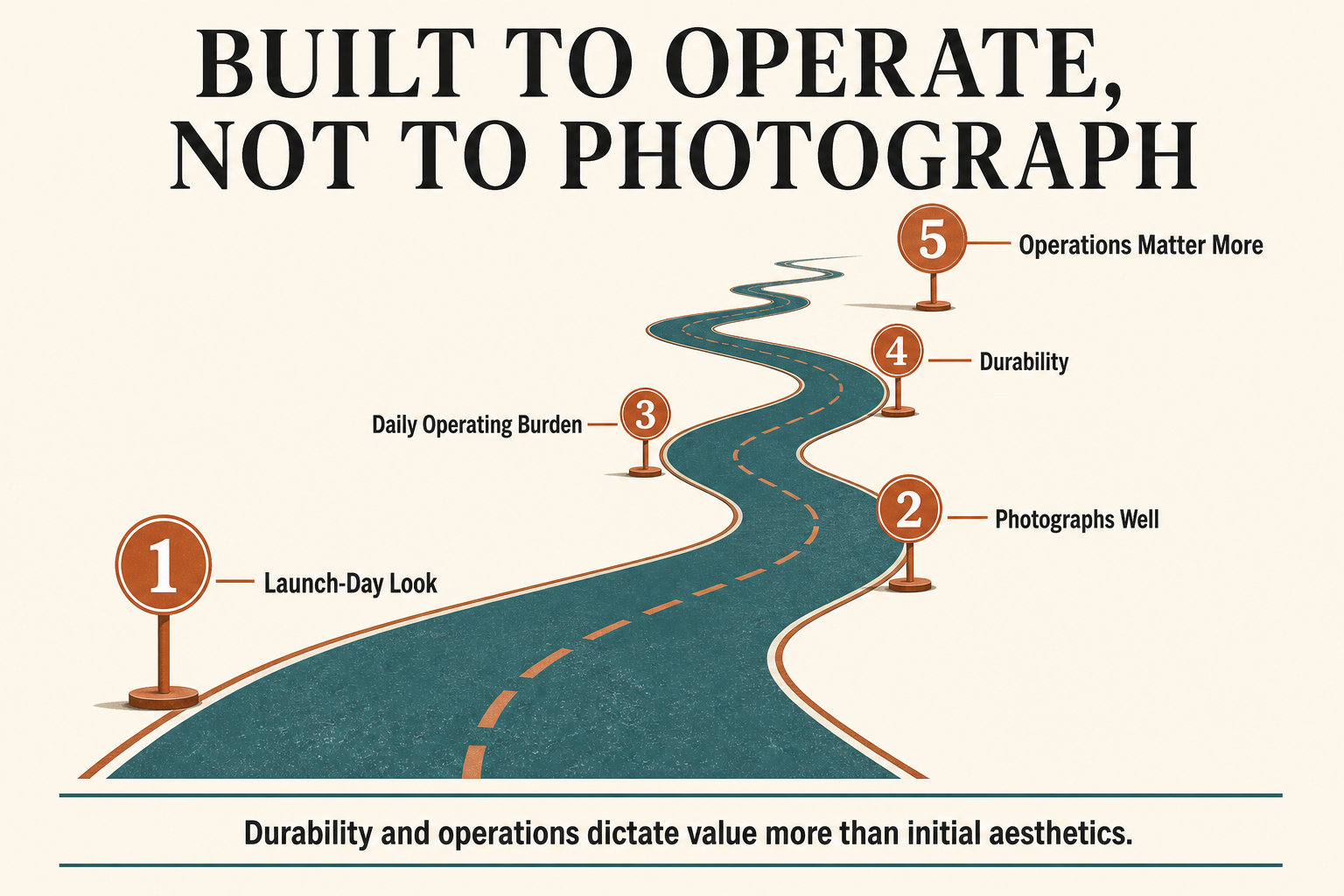
Build for How It Operates, Not How It Photographs
A property photographs best on the day it has never been used. Nothing is worn, nothing is moved, the light is staged, and the rooms are empty of the people they were built for. That is the version most owners optimize for, because that is the version that fills the listing and drives the first wave of bookings.
Then the guests arrive. Twelve of them, on a Friday evening, tired from the drive, looking for somewhere to put their bags and somewhere to pour a drink. The photo cannot help them now. The building either works for what they are about to do, or it makes them feel the gaps.
This is the split most developers never see coming. They build for the camera and hope the experience comes along for free.
The Listing Photo Is a Promise You Then Have to Keep
The economics of a short-term rental reward the photo. Better images lift the click rate, the click rate lifts the bookings, and bookings are what the spreadsheet measures. So the budget flows toward what shows up in a thumbnail: the trendy furniture, the accent wall, the styled kitchen island with the bowl of lemons.
None of that is wrong. It is just incomplete, because the photo and the stay are two different products sold as one.
The photo is consumed in three seconds on a phone. The stay is consumed over a weekend by a group that gathers, splits up, reconvenes, cooks, argues, drinks coffee at different hours, and lands somewhere together at sunset. A space can be beautifully photogenic and quietly hostile to all of that.
You feel the gap in the small failures. The only good gathering space is also the only path to the bedrooms. The kitchen seats four but the house sleeps twelve. The light that looked warm in the listing is a single harsh fixture at night. Each one is minor. Together they tell the guest that the place was built to be seen, not to be lived in.
The photo is consumed in three seconds. The stay is consumed over a weekend.
Premium Is a Set of Decisions, Not a Set of Adjectives
The word "luxury" in a listing is free. Anyone can type it. What it is supposed to signal is a series of expensive upstream decisions that the guest will feel without being able to name.
The discipline is to design around use before you design around appearance. Not "how many bedrooms can we fit," but a different sequence of questions. Where does the group gather when everyone is together? Where do they break into smaller conversations without leaving each other? Where does one person drink coffee alone in the morning? Where does the whole group end up at sunset?
Answer those first, and the layout, the sightlines, the shared spaces, and the scale fall out of the answers. The pool stops being a feature and becomes the place the evening moves toward. The common space stops being a room and becomes the reason the weekend holds together.
This costs more, and that is the part owners flinch at. Large common areas, generous sightlines, and strong outdoor connection are not the cheapest way to build. They consume square footage that could have been another rentable bedroom. The spreadsheet, read narrowly, argues against every one of them.
The second decision compounds the first: real, substantial materials where they actually matter. Weight, texture, the way a door closes, the way a stone surface holds temperature. A guest cannot articulate why one space feels permanent and another feels themed, but the body registers it on arrival. That recognition is almost impossible to fake after the fact. You build it in, or you spend years apologizing for not having.
Premium is a series of decisions a guest feels but cannot name.
What the Refusal Protects
The easy version of a rural luxury rental is well understood. Build a big house, buy trendy furniture, call it a ranch retreat, hire a good photographer, and move on. That produces a commodity. A commodity competes on price and photography, and the moment a newer, better-lit listing appears down the road, the bookings follow it.
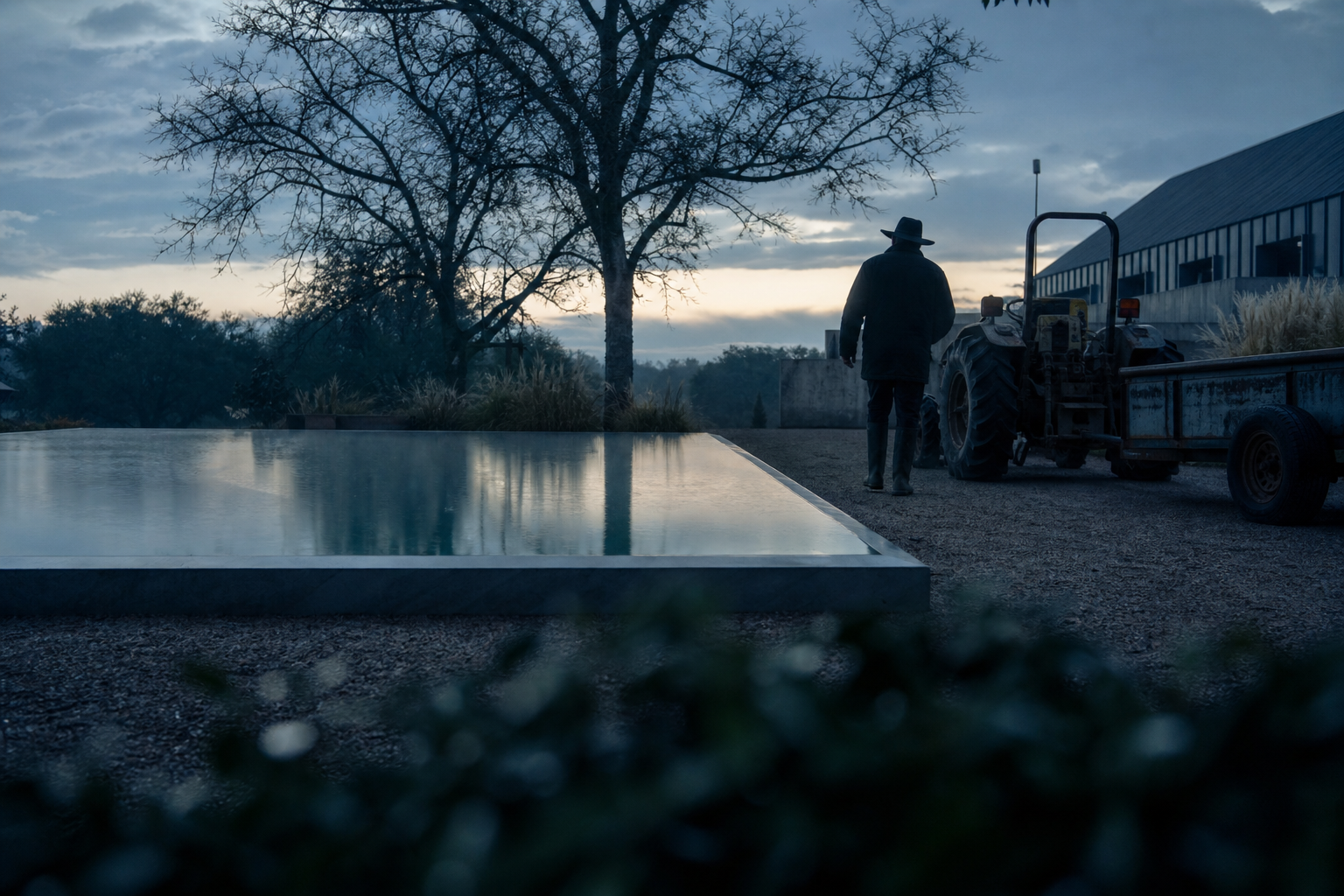
The harder version refuses that path on purpose. Element Ranch, roughly forty acres near Round Top, was designed around the weekend before any finish was chosen. Where people gather, where they scatter, where they land at sunset, all of it settled before the question of countertops ever came up. The pool area, the shared spaces, the scale, the indoor-outdoor connection, those were the load-bearing decisions. The finishes came after, in service of them.
The signature is evening arrival. The property opens off the road, the house holds a quiet presence, and around sunset the light moves through the main living spaces out toward the pool and the land. Guests respond to it emotionally. They call it special, peaceful, different. None of them are describing a thumbnail.
It commands a rate well above comparable rural properties, and the reason is structural, not cosmetic. People are not renting bedrooms. They are renting a setting and a level of execution that survives contact with an actual group on an actual weekend.
A commodity depends on the photo. A setting survives the weekend.
How to Tell If You Built for the Camera
Before the next project, or before you defend the budget on the current one, walk through these.
- The empty-house test: Does the value of the space depend on it being clean, styled, and empty? If it falls apart the moment twelve people move through it, you built a photo, not a property.
- The sunset question: Do you know where the group ends up at the end of the day, and did the building decide that on purpose, or by accident?
- The square-footage flinch: Which generous common space did the spreadsheet argue you should cut into another bedroom, and what did cutting it cost the experience?
- The material you cannot fake: Where did you spend on weight and texture the guest will feel but never photograph, and where did you fake it?
- The down-the-road test: When a newer, better-lit listing opens nearby, does anything you built hold the guest, or do they leave on price?
- The naming test: Can a guest tell you why the place feels better, or only that it does? The second answer is the one you want.
Build for the weekend, not the thumbnail, because the thumbnail gets you the booking and the weekend gets you the next ten.
The camera sells the promise. The operation is whether you kept it.