Forcing Value Beats Timing the Market
Two developers buy similar buildings on the same street in the same month. One waits. He watches rates, reads the absorption reports, and tells his partners the play is to hold and sell into a better market. The other one goes to work. He moves a wall, kills three small rooms to make one room people actually want to be in, replaces the cheap thing the last owner installed, and changes what the building is for.
Eighteen months later the first developer sells into a market that did not cooperate. He took what was offered.
The second developer created a number the market had to respond to, because the asset was no longer the same asset.
The difference was not luck or timing. One man bet on the weather. The other changed the thing he owned.
The Comfort of Waiting for the Market
Waiting feels like strategy. It has the shape of patience, and patience sounds wise. You hold the asset, you watch the cycle, and you tell yourself the upside is coming if you can outlast the downturn.
What waiting actually is, most of the time, is a decision not to decide. The market does the work, or it does not. You are a passenger either way.
The trap is that timing occasionally rewards the passenger. Someone holds through a soft patch, the cycle turns, and the exit looks brilliant. The story gets told. What the story leaves out is everyone who held the same kind of asset and sold into the same turn and got nothing extra, because they brought nothing extra. They owned a commodity and the commodity traded at the commodity price.
A building that competes only on location and condition has no answer when the market goes quiet. It is interchangeable. Buyers compare it to three others and pay the average.
A commodity asset has no story to tell when the market stops listening.
What Forcing Value Actually Means
Forcing value means raising the worth of the asset through decisions you control, not conditions you wait on. The phrase gets used loosely, so it needs a hard edge.
The hard edge is this: the add has to be real. Real means a guest, a tenant, a buyer feels it without being told to. If you have to explain why the space is better, you have not added value. You have added a claim.
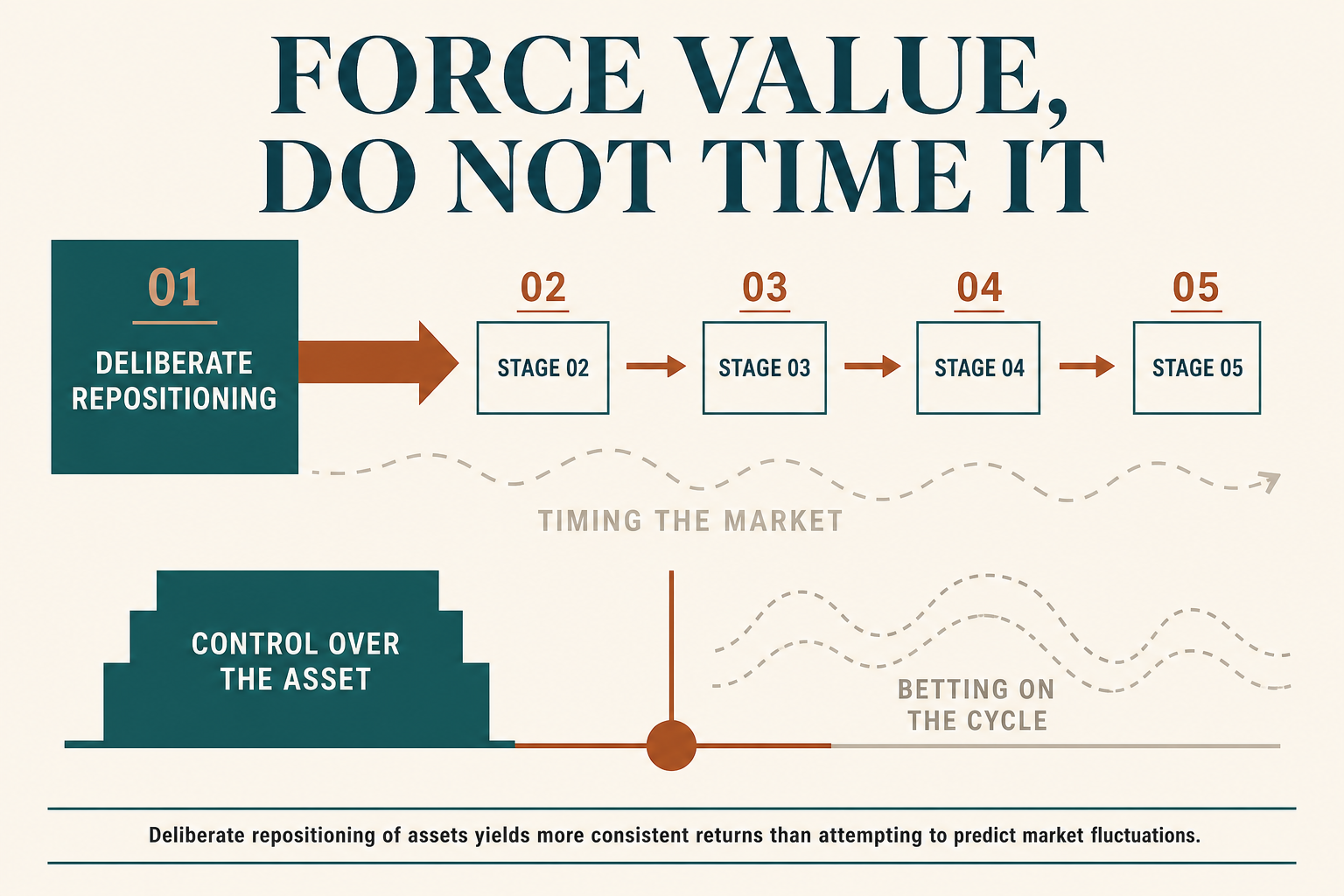
That distinction splits every repositioning into two kinds.
The first kind is decoration. New paint, trendy fixtures, staged photography, a name with the word "retreat" in it. It changes how the asset looks in a listing. It does not change what the asset is. The market sees through it on arrival, and the premium evaporates the moment someone walks the space.
The second kind is surgery. You change the structure, the flow, the use, the thing people physically move through. You spend money where the spend is felt and you refuse to spend it where it only shows up in a photo. This costs more upfront and it is harder to value-engineer down, because the expensive parts are load-bearing to the experience, not cosmetic.
The reason surgery beats decoration is not taste. It is durability.
Decoration depends on the photograph. Surgery survives the visit.
A decorated asset wins the click and loses the walkthrough. A repositioned asset wins the walkthrough, and the walkthrough is where the price gets paid. When you force value the real way, you are not betting on a buyer's mood or a market window. You are making the asset worth more in a way that holds whether the cycle is up or down.
A House Built Around the Weekend
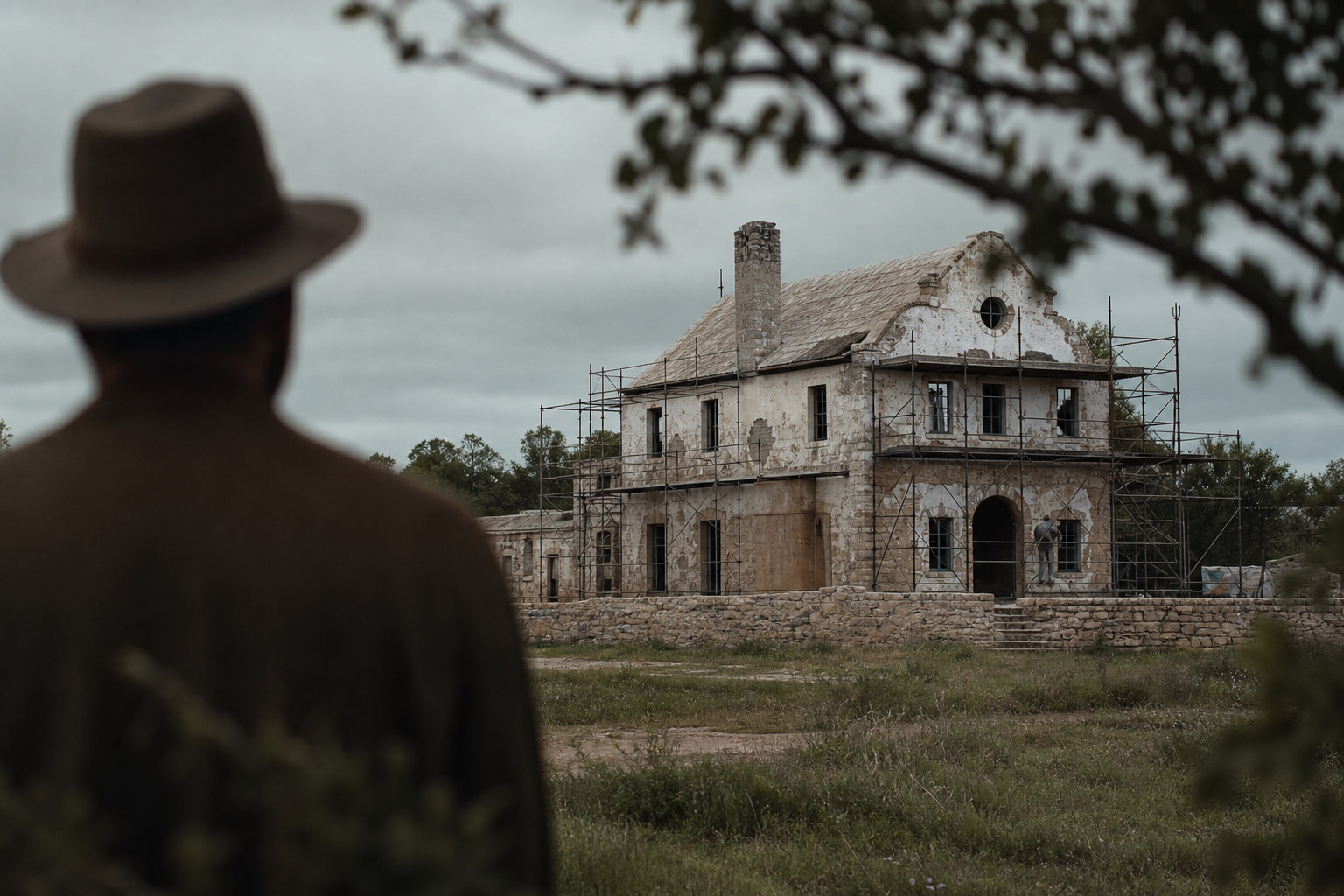
There is a property near Round Top, Texas, where the easy version was obvious and cheap to reach. A big house, trendy furniture, good photography, call it a ranch retreat, list it, move on. That version makes a commodity that lives or dies on the listing photos.
The harder version started with a question that had nothing to do with finishes. Not how many bedrooms fit on the lot. How does a group actually use the place over a weekend? Where do they gather, where does someone drink coffee alone in the morning, where does the group land at sunset, where does the place photograph without anyone staging it?
That question drove the layout before a single material was picked. It produced large shared spaces, strong sightlines from inside out to the pool and the land, and scale that holds a group without feeling like a barracks that sleeps twenty. Those choices cost more. Big common spaces and good outdoor connection are not the cheap way to build.
Then the materials, real and substantial where they mattered, so the place felt permanent instead of themed. A guest cannot always name why a room feels better. They feel weight and intention, and that is nearly impossible to fake after the fact.
The market answered the way it answers real value. Guests call it special, peaceful, different, and it commands a rate well above comparable rural properties. They are not renting bedrooms. They are renting a setting and a level of execution.
People paid for the weekend they could feel, not the house they could count.
How to Tell Surgery From Decoration
Before you reposition anything, separate the real add from the cosmetic one. These questions sort them.
- Walk it cold. If a stranger felt the improvement without you explaining it, it is real. If you had to narrate the value, you decorated.
- Try to value-engineer it. If the expensive part can be cut without changing the experience, it was decoration. The real adds resist the cut because they are load-bearing.
- Find the upstream decision. Did you change what the asset is for, or only how it looks in photos? Use changes the value. Looks change the listing.
- Name who pays the premium and why. If the answer is "a buyer in a better market," you are timing. If it is "this guest, on arrival, for this specific experience," you are forcing value.
- Check what survives the visit. Decoration wins the click. Surgery wins the walkthrough. The price is paid at the walkthrough.
- Ask what you are betting on. A condition you cannot control, or a decision you already made and executed.
The market rewards an asset that is genuinely worth more, and it does so in any weather; the only question is whether you changed the thing or just waited on the room.
Timing is a hope you dress up as a plan. Forcing value is the plan, and it is harder, and it is the only one that holds when the cycle stops cooperating.