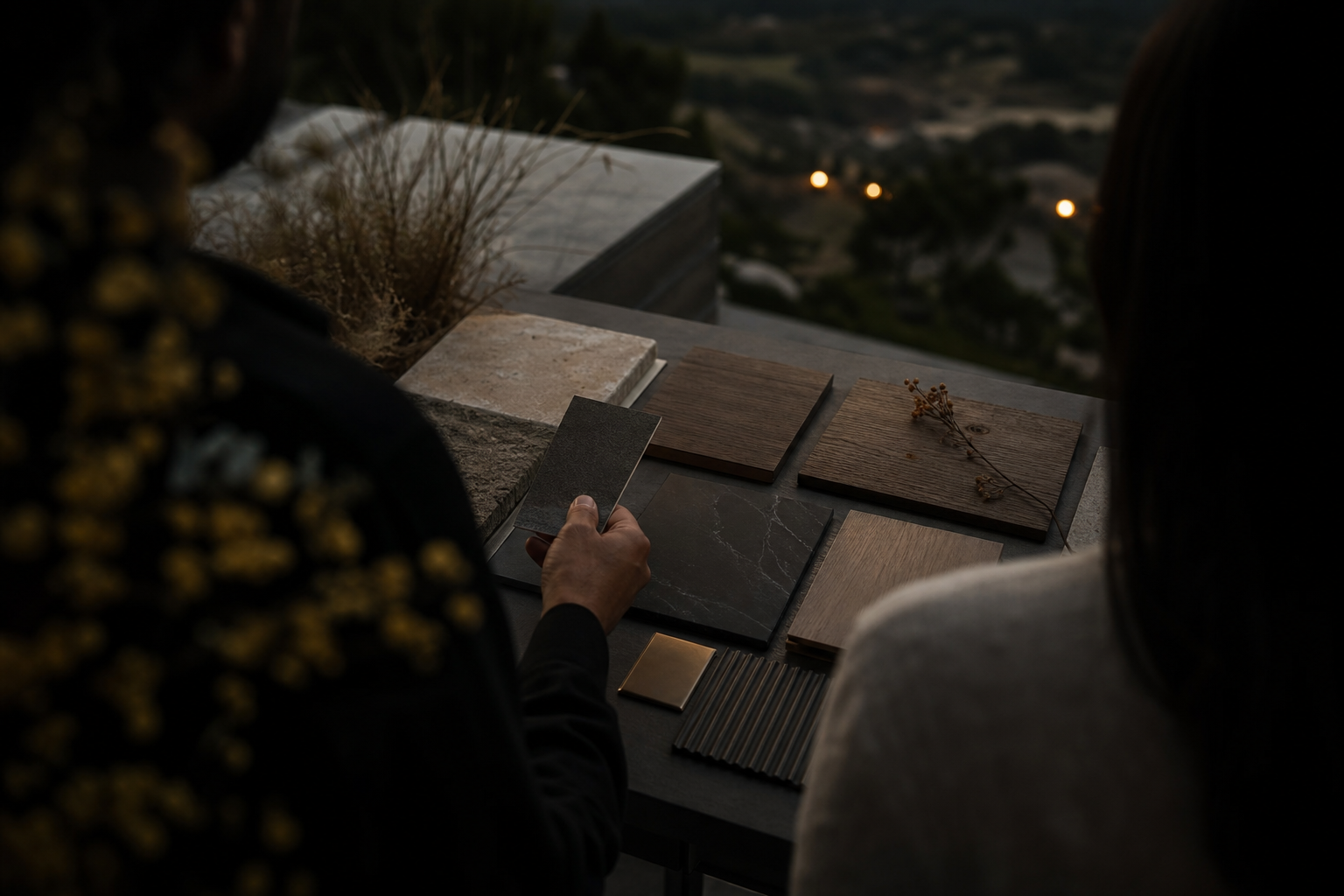
Premium Is a Set of Decisions, Not Adjectives
Read the listings for almost any high-end rental and you will find the same words. Luxury. Elevated. Curated. Bespoke. Stunning. The photography is professional, the furniture is current, the copy is confident.
Then you arrive, and within ten minutes you know.
You cannot always say why. The kitchen island is a foot too small for the group to gather around. The best light in the house falls on a hallway. The pool faces the parking. Nothing is wrong, exactly, and yet the place feels assembled rather than considered. The adjectives promised one thing. The building delivered another.
That gap is the whole subject. A property either holds up when a real group of people moves through it on a real weekend, or it does not. No amount of language closes the distance between the two.
The Word Does The Work The Building Should
Most "premium" positioning is a description applied after construction is finished. The decisions were made on a spreadsheet, optimized for bedroom count and cost per square foot, and the elevated language was added at the listing stage to justify the rate.
This is backwards, and guests feel it as backwards.
A person does not experience your adjectives. They experience where they end up at sunset, whether the group can be together without shouting, whether the morning coffee spot is pleasant or an afterthought. Those are physical outcomes of choices made long before anyone wrote a word of copy.
When the building was not designed around the experience, the words have to carry a weight they cannot carry. They overpromise by definition, because they are filling a hole the construction left open.
A guest does not experience your adjectives. They experience where they end up at sunset.
What Premium Actually Decides
Strip the language away and a genuinely premium property is the sum of a small number of expensive upstream decisions. Not finishes. Decisions about how the place will be used before anyone knows what it will look like.
Start with the question that drives everything else. Not "how many bedrooms can we fit," but "how does a group actually move through this place over two days." Where do twelve people gather. Where do four break off for a quieter conversation. Where does someone stand with coffee at seven in the morning. Where does the whole group land at the end of the day.
Answer those first, and the layout, the sightlines, the shared spaces, and the scale fall out of the answers. Answer them last, or never, and you get a house that sleeps twenty and feels like none of them belong together.
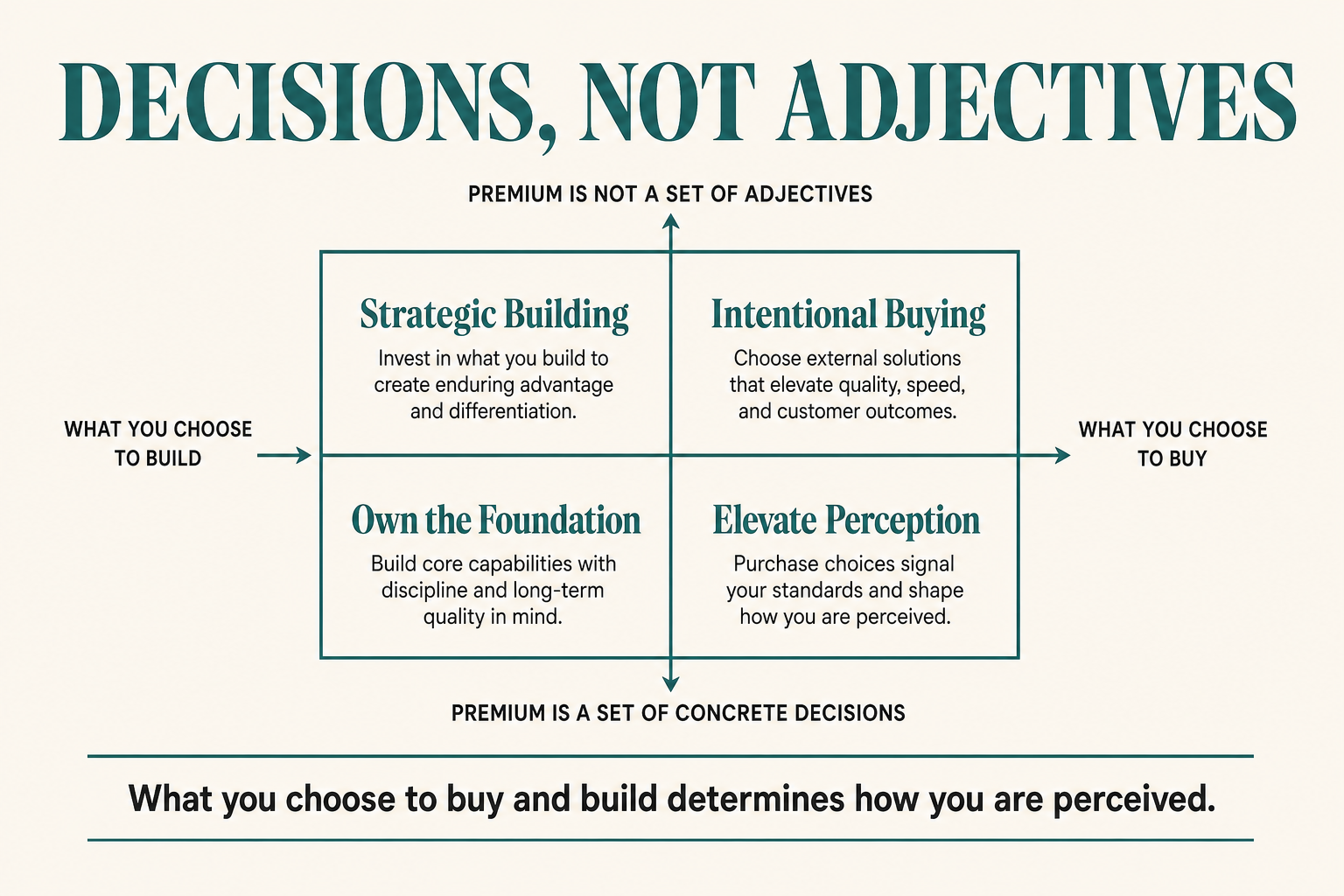
The second decision is material weight where it matters. Real, substantial materials in the spaces people touch and stand in, so the place reads as permanent rather than themed. A guest may not know why a room feels better. They sense texture, weight, and intention, and that is almost impossible to fake after the building is up.
The third decision is a refusal. The easy path is a big house, trendy furniture, good photography, call it a retreat, move on. That produces a commodity that depends entirely on the photos holding the line until the guest arrives. The harder path is to build the thing so the experience survives contact with the guest.
Premium is what you decided before you knew what color the walls would be.
Each of these costs more, and each costs more upstream, where the spending is hardest to justify on a model. Large common spaces, better sightlines, and strong outdoor areas are not the cheapest way to build. They are the things people actually feel. Cut them in value engineering and you have not saved money. You have spent it on a story the building can no longer tell.
The Property That Was Designed As An Evening
Consider a roughly forty-acre property near Round Top, Texas, with a villa built to feel like a private estate rather than a rental house.
The design started from the weekend, not the floor plan. Where the group gathers, where people drift into smaller conversations, where someone has morning coffee, where everyone ends up at sunset, where the place photographs without staging. That sequence drove the layout, the pool area, the shared spaces, and the scale. The big common rooms and the strong indoor-outdoor connection were not the cheapest choices. They were the felt ones.
The signature is the evening arrival. The property opens off the road, the house has a quiet presence, and around sunset the light moves through the main living spaces out toward the pool and the land. Calm, private, elevated, not stiff.
No listing copy produces that. The light was placed there by the orientation of the building, which was decided years before any guest read the word "stunning."
Guests respond emotionally. They call it special, peaceful, beautiful, different. It commands a rate well above comparable rural properties, because people are not renting bedrooms. They are renting a setting and a level of execution that survives the drive in.
They are not renting bedrooms. They are renting a setting that survives the drive in.
How To Tell If This Is You
If you are about to put "luxury" on a property, run it against the decisions that would have to be true for the word to be earned.
- Sequence: Was the building designed around how a group uses it over a weekend, or around how many beds fit in the square footage?
- The sunset test: Do you know where guests will end up at the end of the day, and is that the best space you built, or an accident of the floor plan?
- Material honesty: In the spaces people stand in and touch, did you use real weight, or a finish chosen to photograph well and cost little?
- The value-engineering scar: What got cut to hit the number, and was it a thing guests feel or a thing only the spreadsheet sees?
- The arrival: When someone walks in, does the place confirm the listing or quietly contradict it?
- The dependency: If the photography were average, would the property still command its rate? If not, you built a commodity and dressed it in language.
Premium is decided before it is described, and a guest can feel the difference between the two within ten minutes of walking in.
The adjectives are free, which is exactly why they prove nothing. The decisions cost money upstream, and that cost is the only thing the guest will ever actually feel.