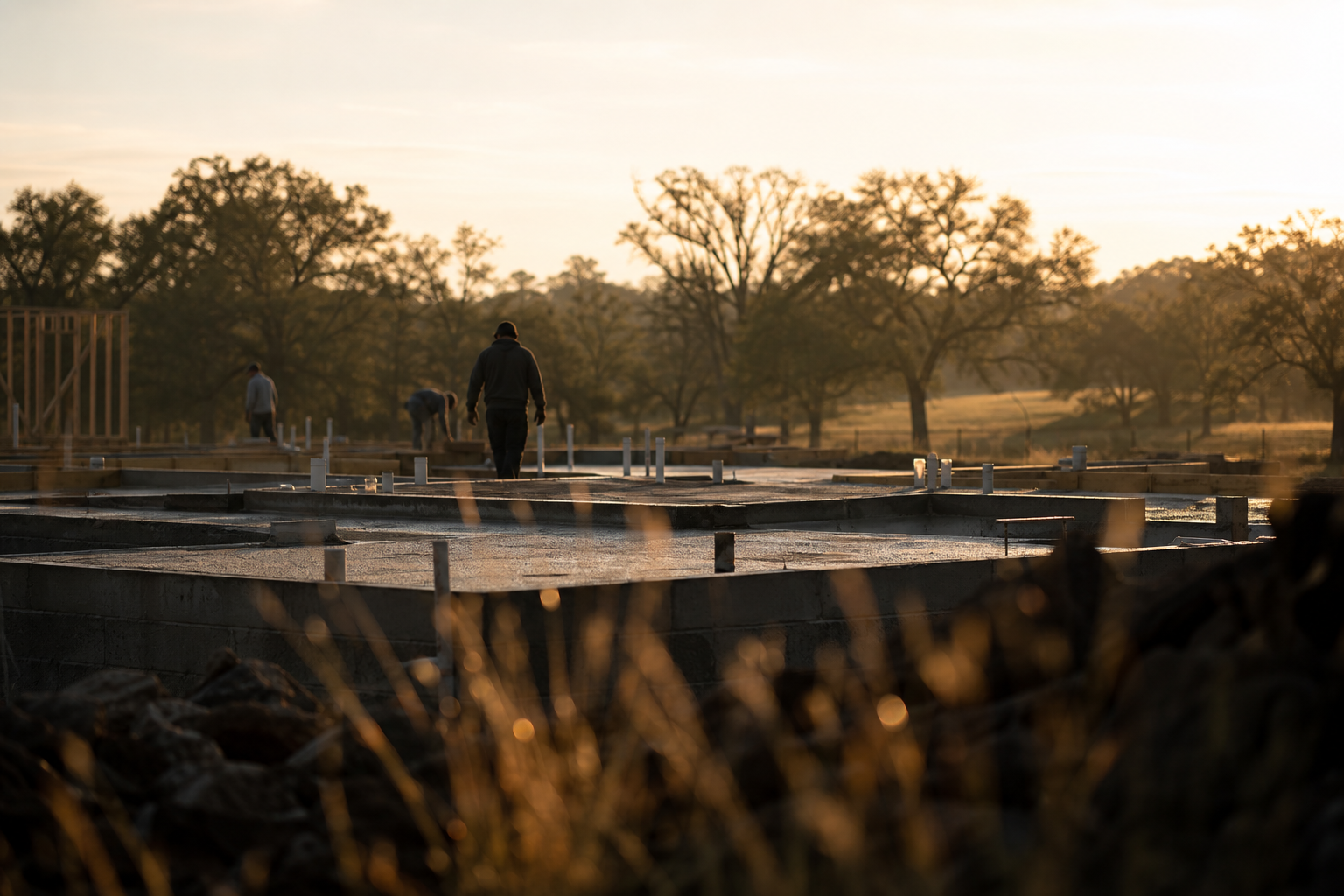
Real Difference Is Built In, Not Written In Later
Two rural properties sit thirty minutes apart. Same county, same hill-country views, same broad strokes in the listing: sleeps sixteen, pool, fire pit, big sky. One rents for a fair weekend rate and goes quiet midweek. The other books out for retreats and weddings months ahead and commands a number that makes owners of the first one squint.
The photos look close. The square footage is close. The finishes, if you read the descriptions, sound close.
Then you walk into both. Within ninety seconds, a guest who could not name a single architectural term knows which one is different. They cannot tell you why. They just feel it, and they pay for the feeling.
So the question worth asking is not what the second property added. It is when.
The Difference Nobody Can Point To
Most owners try to create difference at the end. The building is framed, the floor plan is locked, the budget is mostly spent, and now someone is asked to make it special. So they reach for the levers that are still available late: nicer fixtures, a trendier furniture package, better photography, a name with the word "estate" or "retreat" in it.
These are the adjectives of premium. They are not the structure of it.
You can feel the seam. A space that was built as a generic box and then dressed up reads as dressed up. The light comes from the wrong place. The big group has nowhere natural to gather, so they cluster awkwardly in a kitchen that was sized for a couple. The view is real but the room does not turn toward it. Everything is nice and nothing is right.
The guest does not analyze this. They simply feel slightly off, and slightly off at the premium end is fatal, because the entire promise was that this place would feel better than the others.
You can decorate a commodity, but you cannot decorate it into a different category.
Where The Decisions Actually Live
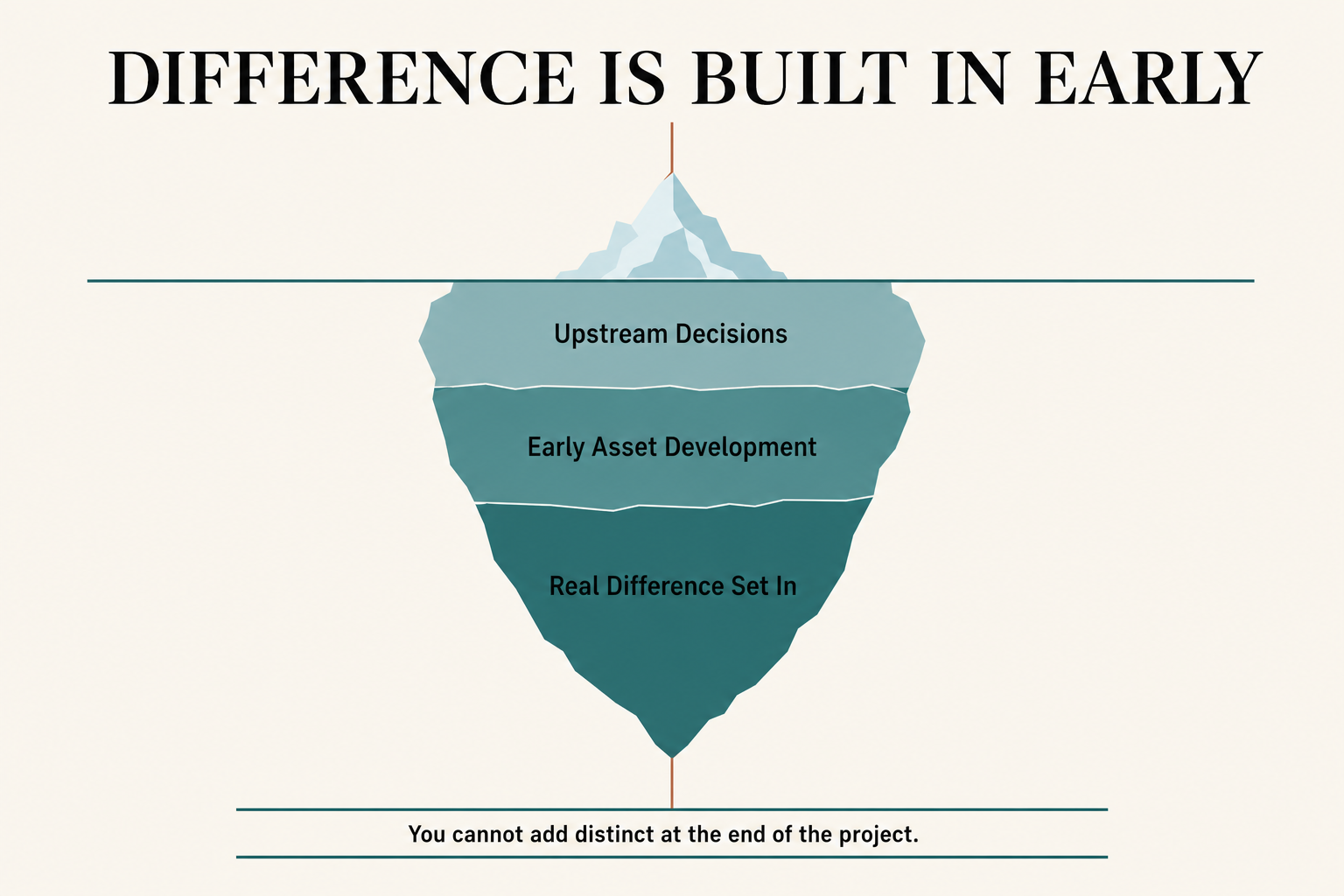
Real difference is decided upstream, before finishes are even on the table. It lives in the questions you ask before you draw the plan.
The wrong first question is "how many bedrooms can we fit." That question optimizes for the listing line and produces a house shaped like its own spec sheet. It maximizes count and quietly destroys experience.
The right first question is how a group actually moves through the place over a weekend.
Think about it the way a guest lives it. Where does everyone land when they first walk in. Where do people break off into smaller conversations without leaving the group. Where does someone stand with coffee at seven in the morning. Where does the whole party end up at sunset, drink in hand, without anyone deciding to go there. Where does the place look right without a stylist arranging it.
Answer those first, and the answers drive everything downstream: the layout, the sightlines, the scale of the shared spaces, where the pool goes, how the inside opens to the outside. These are the expensive decisions, because large common spaces, long sightlines, and strong outdoor connection are not the cheapest way to build. They are the things a guest actually feels.
The second upstream decision is material weight. Real, substantial materials where they matter, so the place reads as permanent rather than themed. A guest will never say "that is solid-core" or "that stone has mass." They feel it as calm and seriousness, and they cannot get that feeling from a veneer applied later.
The cheap version of premium fails the moment a guest arrives; the built-in version survives the visit.
The hard part is that all of this costs more, and it costs more at the exact moment when the spreadsheet is begging you to cut. This is where most distinctiveness dies. Value engineering arrives, and the gathering space gets smaller, the ceiling drops a foot, the outdoor area becomes a slab. Each cut is defensible alone. Together they quietly turn the project back into the commodity it was trying to escape, and nobody notices until the property is finished and somehow ordinary.
What A Guest Feels At Sunset
Consider a roughly forty-acre property near Round Top, Texas, built to be rented at the high end. The villa on it was not designed around bedroom count. It was designed around how a group uses the place over a weekend, before a single finish was selected.
That decision drove everything. Large shared spaces because that is where a group lives. High ceilings and long sightlines because the view was the point. A resort-style pool area placed where people would actually end the day. Real materials with weight, so nothing felt like a set.
The signature moment is evening arrival. The property opens off the road, the house has a quiet presence rather than a loud one, and around sunset the light moves through the main living spaces and out toward the pool and the land. Nobody staged that. It was built into the orientation of the rooms months before anyone thought about furniture.
Guests respond to it emotionally. They call it special, peaceful, different, and they say so before they could tell you one technical reason why. It rents well above comparable rural properties, because what they are paying for is not bedrooms. It is a setting and a level of execution that holds up once they arrive.
Guests do not rent the square footage; they rent the feeling the upstream decisions produced.
How To Tell If Yours Is Built In
Before you spend on the finishes, on the furniture package, on the photographer, run the project against these. They reveal whether your difference is structural or cosmetic.
- Bedroom count first: Did you start with how many heads you could sleep, or with how a group actually lives over a weekend? The order tells you which property you are building.
- The gathering test: Is there an obvious, natural place for the whole group to land at the end of the day, or will they cluster awkwardly wherever there happens to be room?
- The morning question: Does someone have a quiet, specific place to stand with coffee at seven, or did you only design the loud, shared hours?
- Weight you can feel: Are the substantial materials placed where guests touch and sense them, or only where they photograph?
- The unstaged photo: Does the place look right before a stylist arrives, because the light and sightlines were designed in, or only after?
- The value-engineering line: When the budget got tight, did you cut the experience decisions or protect them? List what you cut, then ask whether you cut the difference.
Distinct is an upstream decision wearing a downstream disguise; by the time you can only change the finishes, the category is already set.
If a property feels ordinary once guests arrive, the failure did not happen in the furniture order. It happened in the first question someone asked before the plan was drawn.