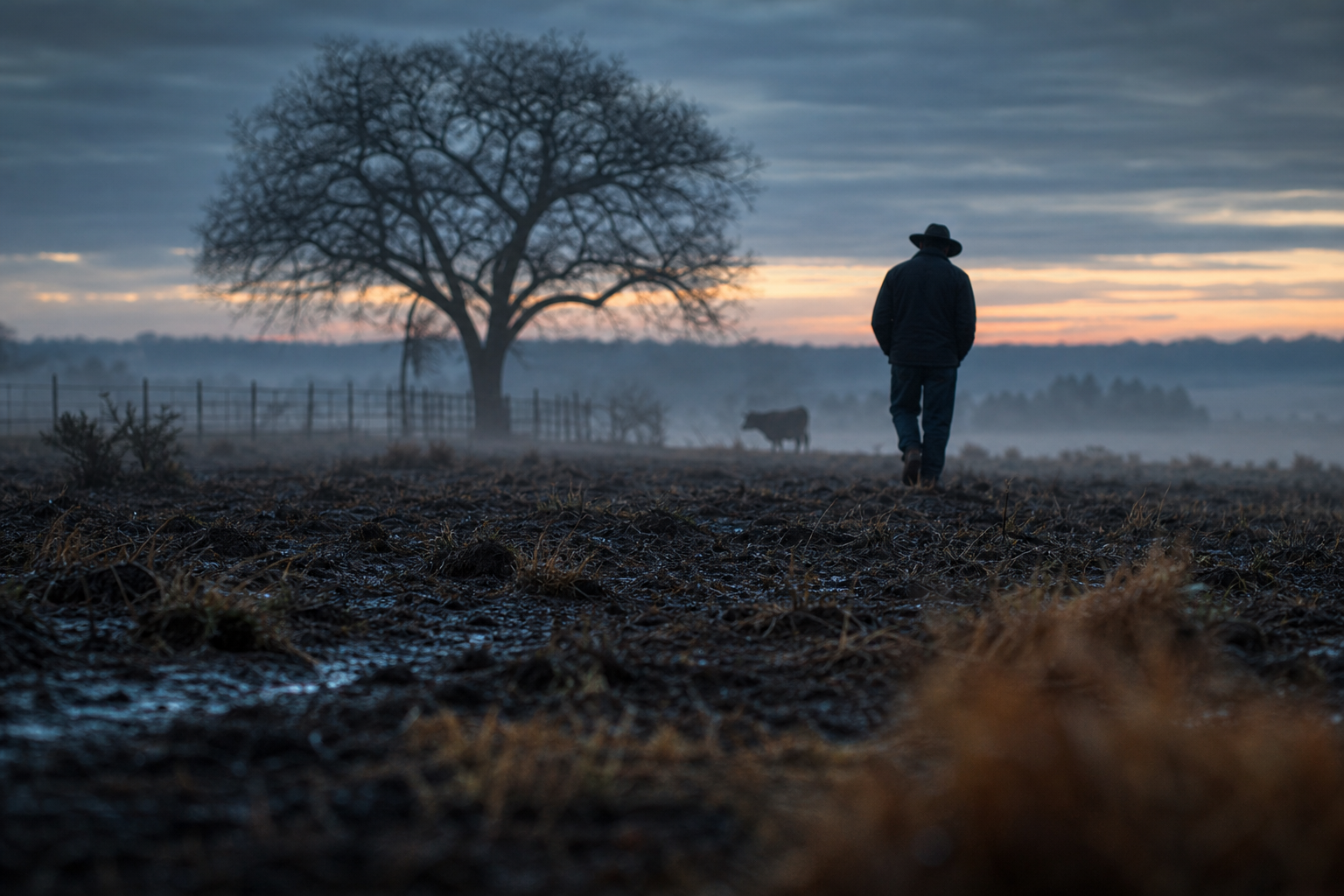
The Cheapest Dirt Hides the Most Expensive Problems
Two listings sit side by side on the same county road. Same acreage, same gentle rise, same line of oaks along the back. One is priced at a number that makes you stop scrolling. The other is priced thirty percent higher, and the photos look almost identical.
Most buyers feel the pull of the cheaper one immediately. It looks like a deal. It looks like the seller has not figured out what he has.
He has figured it out. He has figured out exactly what he has, which is why he priced it where he did. The land that looks like a steal on the listing is almost never cheap by accident. Something downstream of the photographs is doing the discounting, and the listing is built to keep you from seeing it until your money is already in.
What the Listing Is Built to Hide
A land listing shows you the parts of a parcel that photograph well. The view, the trees, the road frontage, the acreage count. It is a sales document, and like every sales document it leads with the strengths and stays quiet on the rest.
The rest is where the money lives.
Access is the first thing. A parcel with a deeded easement across a neighbor's land is not the same as a parcel with its own frontage, even when the map looks the same. Utilities are the second. A power drop half a mile away is a different property than one with a transformer at the corner, and the listing will not tell you which you are buying. Then soil, drainage, the floodplain line that clips one corner, the percolation rate that decides whether a septic system is a formality or a fight.
None of that is in the photographs. All of it is in the price.
The land that looks like a steal on the listing is almost never cheap by accident.
The Buildable-Number Is the Only Number
Here is the move that separates people who do this for a living from people who do it once and learn the hard way.
The price per acre on the listing is not the price of the land. It is the price of the dirt. The price of the land is the price of the dirt plus everything you have to spend before you can put a foundation on it, and that second number is invisible on the listing by design.
Call it the buildable number. It is the all-in cost to get the parcel from "owned" to "ready to build," and it is the only figure that lets you compare two properties honestly. Run it on both parcels above and the cheap one often turns out to be the expensive one.
The buildable number has four parts, and a thin listing hides each one.
- Access. Can you legally and physically get to the building site, and what does the road or the easement cost to make real? A recorded easement that crosses a creek is a bridge you have not priced yet.
- Utilities. Power, water, and waste to the actual pad, not to the property line. The distance from the line to the site is often the whole game, and it is measured in trenching and transformers, not in feet.
- Soil and water. What the ground does when it rains, what it does when you dig, and what the survey says about the floodplain. The corner that floods is the corner the listing photographed from a different angle.
- Off-site. The costs that sit beyond your fence and still land on your invoice. A culvert the county requires. A turn lane. A drainage easement to the neighbor downhill.
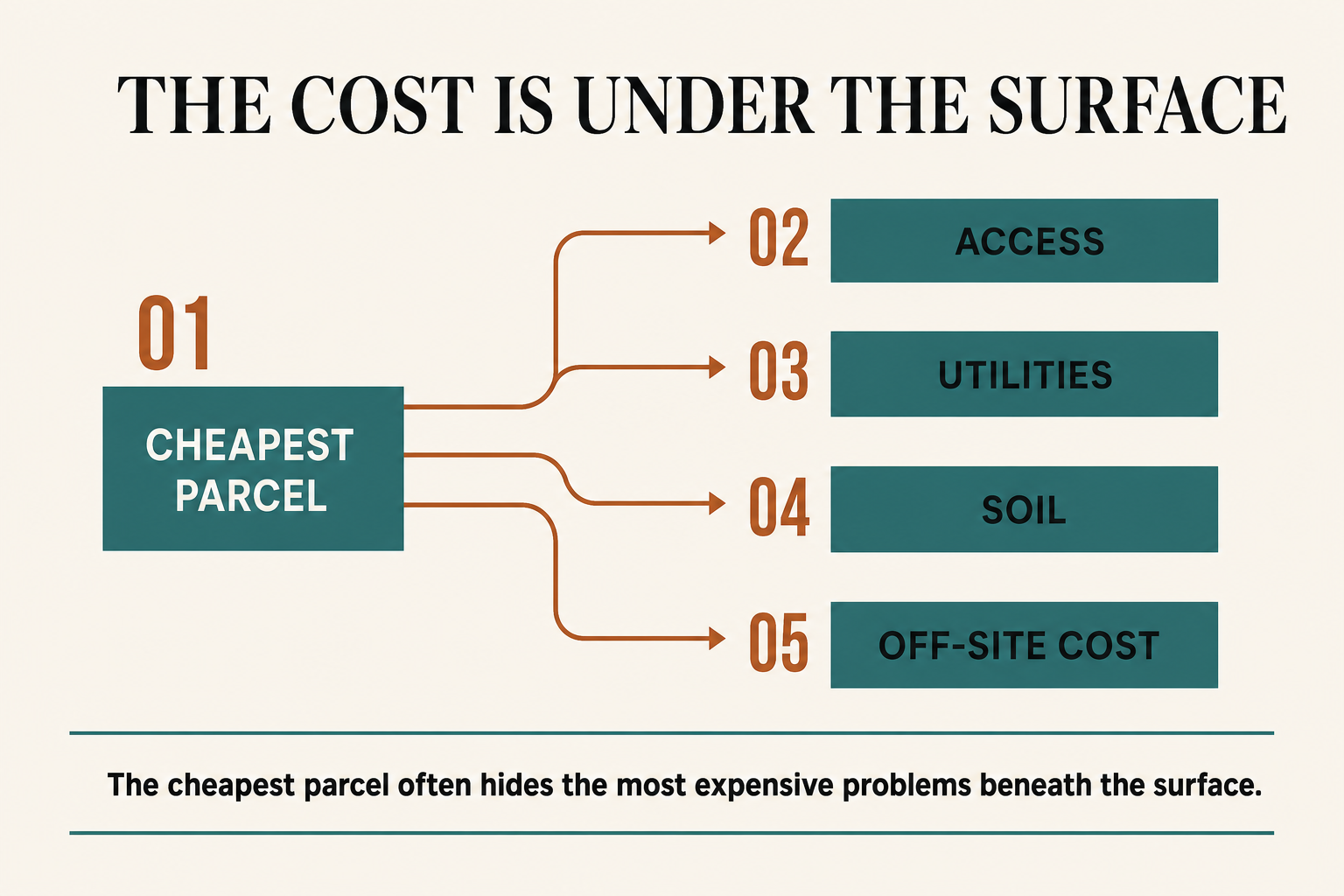
Each of these is knowable before you close. None of them is on the listing. The gap between the two is the seller's advantage, and the only way to take it back is to spend money on diligence before you spend money on dirt.
The price per acre on the listing is the price of the dirt, not the price of the land.
That diligence feels expensive in the moment. A survey, a geotech bore, a real conversation with the utility and the county, an honest civil estimate. It runs into real money on a parcel you do not yet own. It is the cheapest money you will spend on the whole project, because it tells you the buildable number before that number can hurt you.
A Setting You Cannot Fake Later
There is a quieter version of this that owners miss even when they survive the obvious one. The land does not just carry cost. It carries the asset.
On the property near Round Top, the decision that mattered most happened before any finish was chosen. We designed around how a group actually moves through a place over a weekend. Where they gather, where the conversation breaks into smaller pieces, where someone takes coffee in the morning, where everyone lands at sunset. The layout, the pool, the sightlines, the scale all came out of that, and they cost more than the easy version would have.
The reason that decision worked is that the land allowed it. The rise, the orientation, the way the evening light crosses the living spaces toward the pool and out to the open ground. You can buy trendy furniture after closing. You cannot buy the way the sun moves across a parcel, and you cannot add it in value engineering when the budget tightens.
A cheap parcel often forces the building to fight the land. An expensive one lets the building agree with it.
You can change the finishes after closing. You cannot change the way the sun crosses the land.
That is the part the per-acre price never captures, in either direction. The dirt is the cheapest thing you are buying. What it lets you build, and what it quietly forbids, is the rest.
Questions That Reveal the Real Price
Before you let a low price decide for you, work the parcel against these.
- Access: Is the legal access and the physical access the same line, and what does the gap cost to close?
- Utilities: How far is power, water, and waste from the actual building site, not the property line, and who pays to bring it?
- Soil: Has anyone put a bore in the ground, or are you assuming the dirt holds a foundation?
- Water: Where does the floodplain line fall, and where does the parcel send its rain?
- Off-site: What will the county or a neighbor require beyond your fence before you can build?
- The build itself: Does the land let the asset agree with it, or will the building spend its budget fighting the site?
- The number: Have you run the all-in buildable cost on both parcels, or are you still comparing dirt to dirt?
Compare the buildable number, never the per-acre price; the cheapest dirt is usually the most expensive land.
The listing is honest about the view and quiet about everything that decides the view's price. The seller already knows the difference. Your job is to know it before you sign, not after.