
The Most Profitable Guest Is the One You Already Know
A guest stays for a weekend, leaves a warm review, and disappears back into the platform that sent them. The next booking is a stranger again. The owner counts the nightly rate, sees a good number, and moves on. On paper the property is performing.
But look at what actually changed. Nothing was built. The guest who just spent three days in the house, who learned where the coffee is and where the light lands at five o'clock, who already trusts the place, is now exactly as hard to reach as someone who has never heard of it. The relationship was rented for a weekend and then handed back. The rate was real. The relationship was not yours to keep.
That is the gap most short-term rental owners never examine. They optimize the stay. They never ask who owns the guest after it.
What The Platform Quietly Keeps
Platforms earn their fee. They create visibility, they manufacture trust between strangers, and they deliver volume an owner could not reach alone. That part is honest work and worth paying for.
The problem is everything they keep in exchange. The rules, the messaging layer, the cancellation terms, the search ranking, the fee structure, and the most valuable thing of all: the guest's memory of where the booking lived. A guest who loved the weekend often remembers the platform, not the property. They will search the same way next time, land on whatever ranks, and compare you against a hundred listings on price and photographs.
If the only relationship runs through a platform, you have built something easy to replace. The guest's loyalty attaches to the channel, not to you.
The rate was real. The relationship was not yours to keep.
Two Bookings That Look Identical And Are Not
Every booking arrives looking the same: dates, a headcount, a payment. Underneath, they are two different economic animals, and an owner who treats them the same leaves the better one on the table.
The first is a commodity booking. The guest needs a place for those dates, sorts by price, books, stays, and is gone. There is nothing wrong with it. But its value is fully spent the moment they check out. To get the next one you pay again, in fees and in ranking, for another stranger.
The second is a relationship booking. The guest is not asking whether the dates are open. They are explaining what they are trying to create, a family reunion, a retreat, a milestone birthday, a stretch of days around a wedding, and asking whether the setting will hold it. That guest is buying confidence, not a bed count. They want to know a real owner stands behind the house. And when the weekend works, they do not just leave a review. They come back, and they bring the next gathering with them.
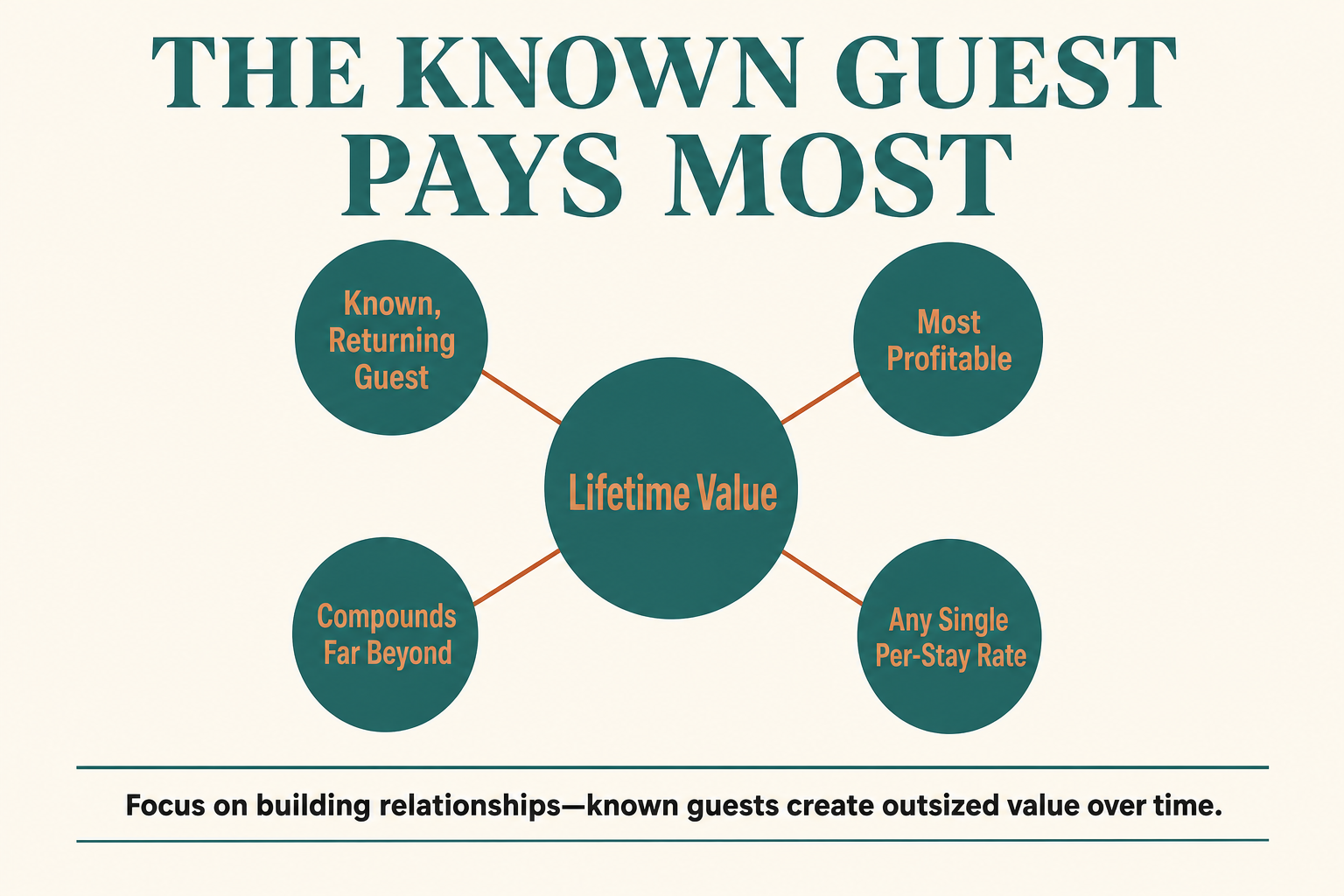
Here is the shift that changes the math. The first guest is a transaction you must win again from zero. The second is an asset that compounds. Their lifetime value, the reunion this year, the birthday next year, the friend they refer who plans their own retreat, dwarfs any single nightly rate. And almost none of it depends on where you rank in search.
A commodity booking is spent at checkout; a relationship booking is just beginning.
The instrument that captures the second guest is not a discount. It is a direct, owned relationship and a personal response. Automation handles logistics, the lock code, the directions, the checkout time, and it should. It cannot handle judgment. A budget operator sends one template and is done. At the premium end, the better move is to read the actual purpose of the trip and answer the real concern behind the question. For a women's gathering, a wedding stay, or a fortieth birthday, the tone of the reply is itself part of what they are paying for. Not concierge theater. Just thoughtful where it counts.
Where The Difference Is Won Or Lost
A property near Round Top, Texas, sits on roughly forty acres, and it books through Airbnb and VRBO like everyone else. But it was never run as only a platform business. Platforms bring the first look. The relationship is built off-platform, in how the inquiry gets answered and how the stay actually goes.
The tell came early. Guests stopped asking "is it available." They started writing to explain what they were planning and whether the place would work for their group. That is not a price shopper. That is someone deciding whether to put their wedding weekend, their family reunion, their retreat, in your hands. Answer that with a template and you have told them exactly how much you care.
The other half is invisible until you are living it. Once the property is live, the business becomes consistency, cleanliness, maintenance, vendor reliability, guest screening, and protecting the house. At the premium end the small things grow teeth. The same minor inconvenience that merely annoys in a budget rental reads as off-brand in a luxury one. The asset earns the attention. Operations protect the revenue.
The asset gets you the booking. Operations get you the next one.
You cannot build something premium and run it casually. The operating standard has to match the asset standard, because the guest you most want to keep is the one most likely to notice the gap.
What To Check Before Your Next Booking
- When a guest checks out happy, what do you actually own? Their email and a real relationship, or a five-star review on someone else's platform?
- Can you tell a commodity inquiry from a relationship inquiry in the first message, and do you answer them differently?
- How many of last year's bookings came back, directly, without paying a fee to reach them again?
- When a guest explains what they are trying to create, who answers, a template or a person with judgment?
- Does your operating standard, the cleanliness, the response time, the small details, actually match the price you charge?
- If your main platform changed its rules or buried you in search tomorrow, how much of your revenue would survive?
The nightly rate is what you charged once; lifetime value is what the relationship is worth if you keep it.
Acquisition will always be the loud number. The quiet one, the guest who already trusts you and brings the next gathering, is the one that pays the rent.