
Waiting on Someone Else's Clock Is a Choice, Not a Fact
A sales rep gets the spec sheet from an engineer at nine in the morning. The part is a non-standard alloy gate valve, a one-off configuration nobody has quoted this month. He forwards it to the manufacturer for pricing clearance and starts on something else, because there is nothing left to do until the answer comes back.
The answer comes back Thursday.
By Thursday the purchasing manager has two other quotes on her desk and a signature ready to go. She never disliked the part. She never disliked the rep. She just stopped waiting, because nobody told her she had to.
This gets described afterward as a manufacturer problem, a turnaround-time problem, a "they're slow" problem. It is worth asking whether that description is accurate, or whether it is just convenient.
The Excuse That Feels Like a Fact
Blaming the clock is comfortable because it removes the question of what the rep, or the company, could have done differently. The manufacturer becomes weather. Nobody sues the weather.
But look at what actually sits between the inquiry and the lost order. It is not manufacturing capacity. It is not the part itself. It is a pricing answer, a single piece of information that, in most cases, already exists somewhere, because this exact valve, or something close to it, has been quoted before.
The delay is not the manufacturer manufacturing anything. The delay is an email sitting in a queue.
That distinction changes who is actually responsible for the outcome.
The manufacturer's slowness is real. Whether it decides the deal is a choice someone else made.
Why First Matters More Than Best
Here is the part most sales organizations get backwards. They assume the purchasing decision works like a comparison: three quotes arrive, someone lines them up, the best price and best terms win.
That is not what happens on the ground. A purchasing manager with forty open requisitions is not building a spreadsheet to compare your valve against two competitors. She is trying to clear her desk. The moment a quote lands that is credible, priced sensibly, and ready to sign, the incentive to keep waiting disappears. Comparison shopping is a discipline reserved for large or strategic purchases. Most of what moves through an industrial purchasing office is neither. It is volume, and volume rewards whoever removes friction first.
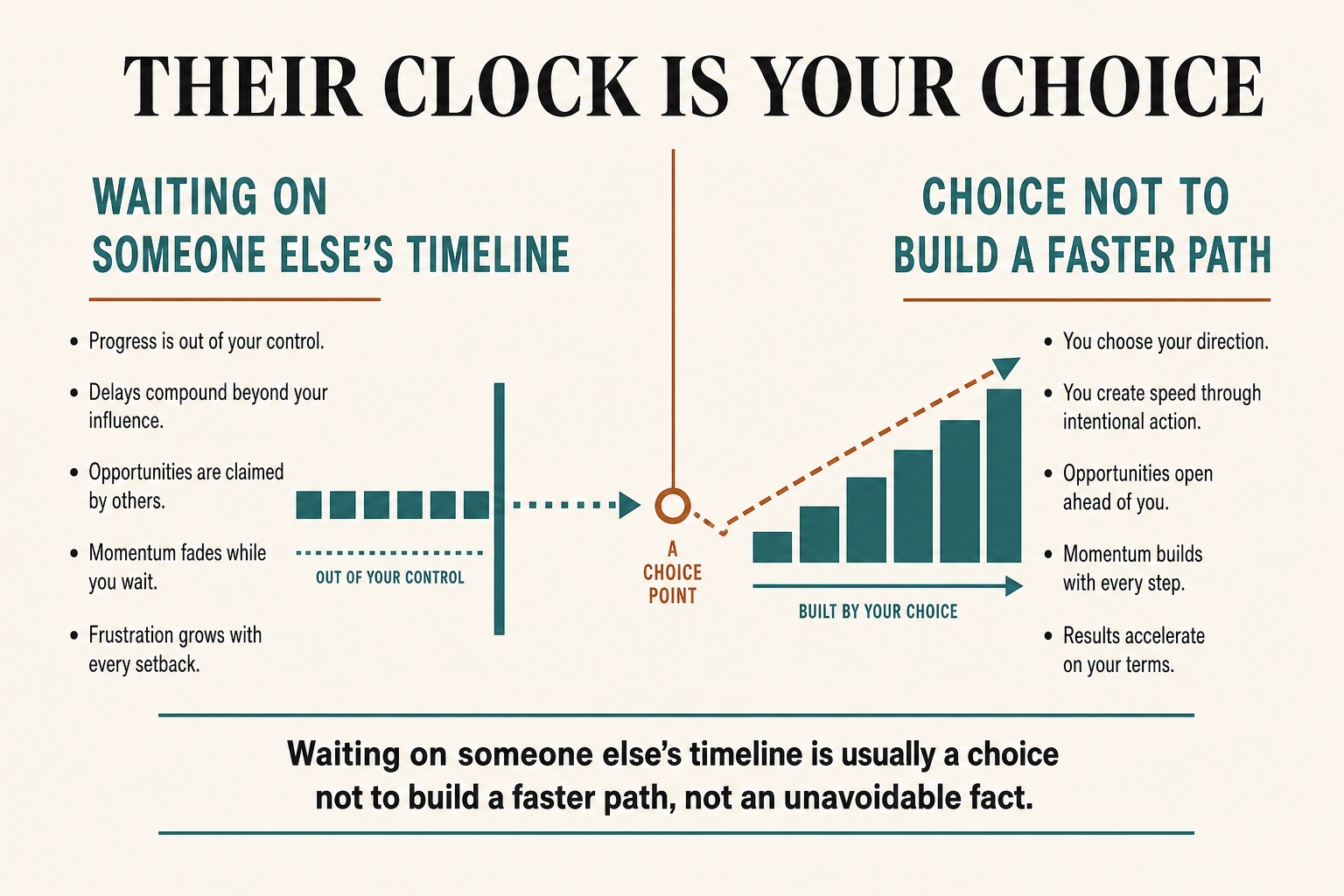
This means speed is not a nice-to-have layered on top of a good product. Speed is a form of competitive advantage that has nothing to do with the valve itself. Two companies can sell the identical part, at the identical quality, and the one that answers first wins a disproportionate share of the business, simply because the buyer stopped looking once a workable answer arrived.
Once you see that, the manufacturer's response time stops looking like an external condition you tolerate. It starts looking like a gap in your own process that happens to be located on someone else's desk.
Speed isn't an advantage layered on top of the product. For a lot of buyers, speed is the product.
The fix is not to call the manufacturer more often, or complain louder, or escalate to a plant manager who has his own queue. The fix is to stop needing the answer from them in the moment it matters. Most pricing requests are not new information. They are variations on quotes that have already been cleared, for valves that have already been priced, sitting in an inbox instead of a database. The job is to capture that history once and make it retrievable in seconds, instead of re-asking the same question and waiting for the same kind of answer every time.
Building the Way Around the Wait
This is the shape of the system built at Specialty Valve Group. Salespeople, inside and outside, were losing track of inquiries and losing time to the back-and-forth with the manufacturer on spec clearance and pricing. So the fix was not a better relationship with the manufacturer. It was a system that made most of those conversations unnecessary.
At the center of it sat a historical-pricing database, built SKU by SKU, so that when a request came in for a valve the company had priced before, in that spec, that alloy, that configuration, the quote could go out immediately instead of waiting days for someone else to confirm it. The system enforced the business rules automatically, tracked every open inquiry so nothing sat unanswered, and sent reminders so a stalled quote never quietly died in someone's inbox.
The operating principle behind it was blunt: better to ask forgiveness than permission. Quote off the historical price, get the order, reconcile with the manufacturer after, rather than waiting on their clock for every single request as if it were the first time anyone had ever asked.
Most of what looked like a new question to the manufacturer was already an answered question sitting in a file.
The manufacturer's turnaround time did not change. It did not need to. The company simply stopped routing its speed through a bottleneck it did not control, for requests that did not actually require it. First to quote kept winning, and first to quote was now the company's own default, not something it hoped for on a good week.
What to Check Before You Act
Before accepting that a delay is out of your hands, it is worth checking whether it actually is.
- Has this exact request, or something close to it, already been answered before, and is that answer sitting in someone's memory instead of a system?
- Who actually holds the information you're waiting on, and is it truly new information, or a repeat of something already known?
- What would it take to answer this internally, even provisionally, instead of routing it externally every time?
- Is the bottleneck the outside party, or the absence of a record that would make the outside party unnecessary for routine cases?
- Would you rather be right and slow, or approximately right and first, given how the buyer on the other end actually behaves?
- What's the cost of being wrong if you answer without waiting, and is it smaller than the cost of losing the order to whoever answered first?
A bottleneck you have studied and chosen to route around stops being a bottleneck. It becomes a decision you made about where your time is worth spending.
The manufacturer was never going to move faster. The company that stopped needing them to did.