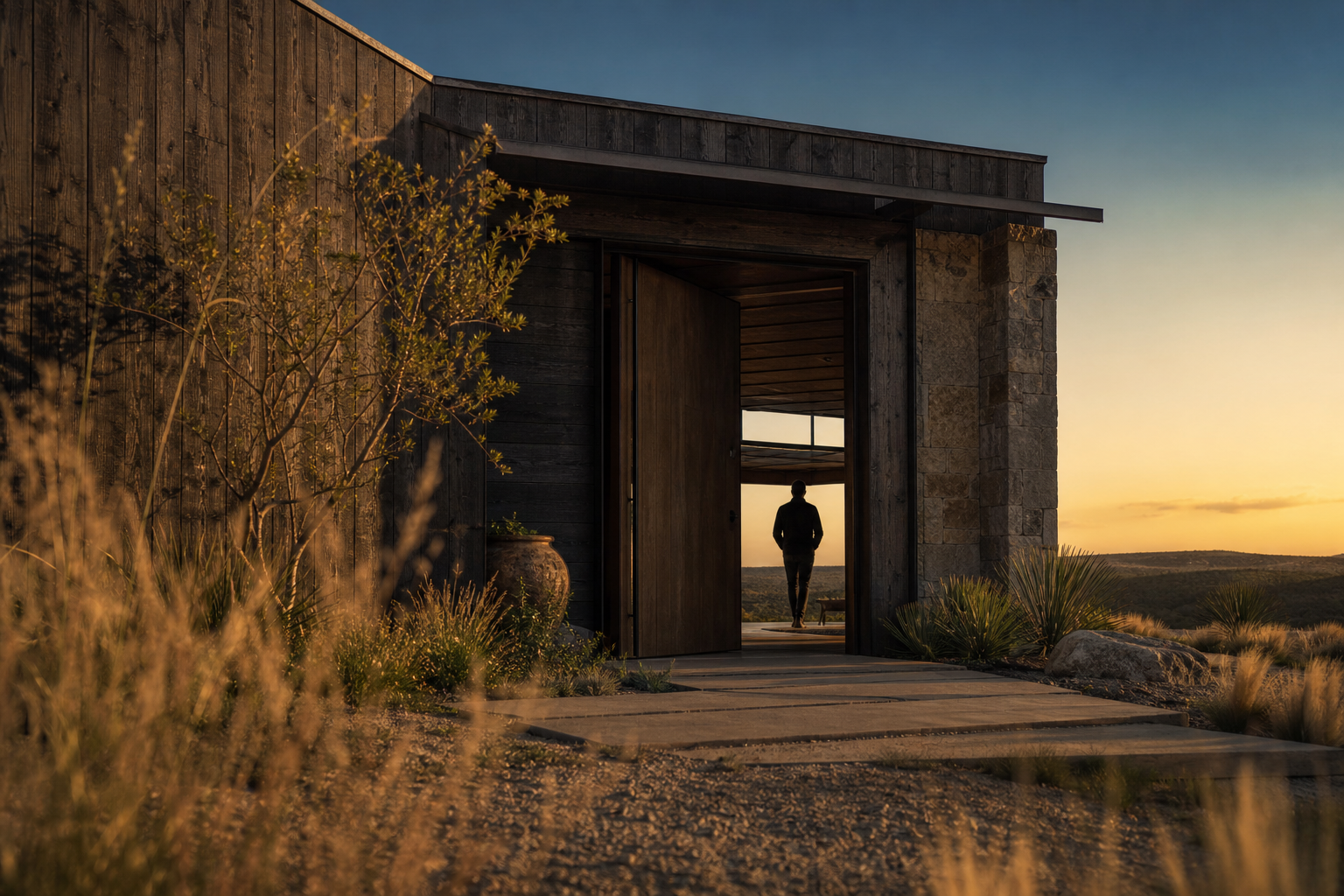
You Are Building a Reaction, Not a Property
Ask a developer what they are building and most will describe square footage. Bedroom count. A pool. A list of finishes that will end up on a spec sheet for a broker.
Ask a guest why they booked the place and none of them will mention the square footage.
They will say it felt calm. It felt private. It felt like somewhere they wanted to stay longer than planned. Nobody remembers the tile. They remember standing in a specific spot at a specific time of day and feeling something shift.
That gap, between what gets built and what gets felt, is where most premium properties quietly fail without ever knowing it. The building gets finished. The photos look fine. The guests come once and do not come back, and nobody can say exactly why.
The Spec Sheet Lies
Most luxury builds start with a program. Bedroom count, bathroom count, square footage targets, a materials budget. The architect designs to satisfy the program. The interior designer layers finishes on top of the program. Everyone is optimizing the same document, and the document was never the point.
A group of twelve people does not experience a property as a floor plan. They experience it as a sequence. Where they land when they arrive tired from the drive. Where the coffee happens the next morning, half-awake, before anyone has decided what the day is. Where the group naturally splits into two conversations after dinner. Where everyone ends up, without planning it, right before the sun goes down.
If nobody designed for that sequence, the building still gets built. It just does not produce the reaction anyone was hoping for.
The floor plan is what gets built. The sequence is what gets felt, and almost nobody designs for it on purpose.
Backward From the Feeling
The upstream decision is a strange one to make, because it happens before finishes, before furniture, sometimes before the final layout is locked. You have to decide what the guest should feel at 7pm on a Saturday, and then work backward into the architecture that produces it.
That means asking where people actually gather, not where the brochure says the "great room" goes. It means tracking where a person drinks coffee alone before the rest of the group is up, and making sure that spot exists and feels good to occupy. It means understanding that at sunset, a group of people will drift toward light and a view, whether or not you gave them a defined space to drift into.
This is not decoration. It is closer to choreography. You are staging a weekend before you know who the guests will be, using nothing but sightlines, ceiling height, the placement of a pool, and the relationship between inside and outside.
Once you frame it that way, the ordinary building decisions stop being about cost per square foot and start being about which decisions the guest will actually feel.
Big shared spaces cost more than a house chopped into a maximum number of bedrooms. Strong indoor-outdoor connection, the kind where a living room does not end at a wall but keeps going into a covered porch and then a pool deck, costs more than a house with a back door and a patio set. Sightlines that let evening light move through the main living space toward the water and the land cost more than a floor plan optimized for "how many beds can we fit."
None of that shows up as a line item labeled "guest reaction." It shows up as a construction budget that is harder to defend in a spreadsheet, right up until the first season of bookings comes in and the reaction is the thing people are paying for.
You are not pricing bedrooms. You are pricing the moment someone stands still and feels the place work.
The second piece is materials, and this one is easy to underestimate because guests cannot articulate it. Nobody arrives and says "I appreciate that this stone is real." But people sense weight. They sense whether a surface has been chosen because it was correct for the space or because it was available at the right margin. A themed luxury build, the kind with trendy furniture and a big house and a good photographer, works in photos and falls apart in person, because the material telling a different story than the architecture is telling.
Substance is hard to fake retroactively. You either built it in or you did not.
What the Land Actually Sells
At Element Ranch, the property sits on roughly 40 acres near Round Top, Texas, and the decision that shaped everything came before a single finish was chosen. The layout was built around how a group actually moves through a weekend. Where they gather. Where smaller conversations peel off. Where the morning coffee happens. Where everyone ends up when the light starts to change.
That drove the scale of the shared spaces, the position of the pool, the strength of the connection between the main living areas and the outdoors. It was not the cheapest way to build. Large common spaces and strong sightlines and a serious outdoor area cost more than a house designed around a maximum bedroom count. But those are the things a guest actually feels standing in the space, not the things they check off a listing.
The easy version existed the whole time. A big house, on-trend furniture, call it a ranch retreat, hire a good photographer, move on. That version photographs fine and rents fine for a while, and it is a commodity, because it depends entirely on the photo holding up once someone arrives.
What actually happened is guests describe the place using words that have nothing to do with amenities. Special. Peaceful. Different. That language shows up because the property was built to produce a specific feeling at a specific moment, evening arrival, when the house opens up off the road with a quiet presence, and the light moves through the main spaces out toward the pool and the land. It commands a rate well above comparable rural properties, because people are not renting bedrooms. They are renting that moment, and the confidence that it will happen again for them the way it happened for the guest who told their friends about it.
Nobody pays a premium for square footage. They pay a premium for a feeling they cannot get anywhere else.
Where to Look First
- The sequence test: Can you name, in order, where a group of guests goes from arrival to sunset, or does your design only describe rooms, not movement?
- The morning test: Is there a specific place someone drinks coffee alone before the group wakes up, and does that place actually feel good to occupy?
- The sunset test: Where does the group end up without being told to, and did you design that view on purpose?
- The material test: If a guest ran their hand along the surfaces in the house, would they feel intention, or would they feel a spec sheet?
- The photo test: Does the property depend on a skilled photographer to look special, or does it hold up in person once the photographer leaves?
- The value-engineering test: When the budget got tight, what got cut, and was it something guests actually feel, or something only a spreadsheet cares about?
- The commodity test: If a competitor copied your finishes and your bedroom count, could they replicate the reaction, or only the listing?
You are not building a property. You are engineering a reaction, and every upstream decision either serves that reaction or quietly works against it.
The finishes get noticed last, if at all. The feeling is what gets remembered, rebooked, and repeated to the next group of guests before they ever see a photo.