You Make Your Money When You Buy
Two developers look at the same building. Same street, same square footage, same tired roof. One runs the numbers and sees a project that works if a few things break right. The other runs the same numbers and walks.
A year later, one of them is fine and the other is feeding the deal cash every month, waiting for a market that was always supposed to arrive.
Nothing about the building changed between them. The rents were the rents. The roof needed the same work. The difference was decided in a single number that got locked the day each of them signed. After that day, the deal had a ceiling neither of them could raise by working harder.
The Day The Outcome Gets Set
There is a comforting story in this business that says you make your money through operation. Better management, tighter expenses, a smarter renovation, a brand. All of that is real, and all of it matters at the margin.
But the margin is where it lives. The structure was set earlier.
When you overpay at acquisition, you spend the entire hold trying to earn back a number you already gave away. Every good month services the mistake instead of building the return. You can run the property flawlessly and still trail the person who bought the same asset for less and ran it adequately.
That is the part owners resist, because it puts the decisive moment behind them, in a place they can no longer fix.
You can out-operate a fair price. You cannot out-operate a bad one.
The Entry Price Is The Whole Position
Walk it forward in plain terms.
Your return is built from three things: what you paid, what the asset produces, and what someone later pays you for it. The middle one you influence over years of work. The first one you decide in an afternoon, and it sets the floor under everything after.
A low enough entry price forgives a soft year, a slow lease-up, a roof that costs more than the inspection promised. It gives you margin to absorb the things that always go wrong. A high entry price does the opposite. It removes the cushion before you have made a single operating decision, and it converts ordinary surprises into emergencies.
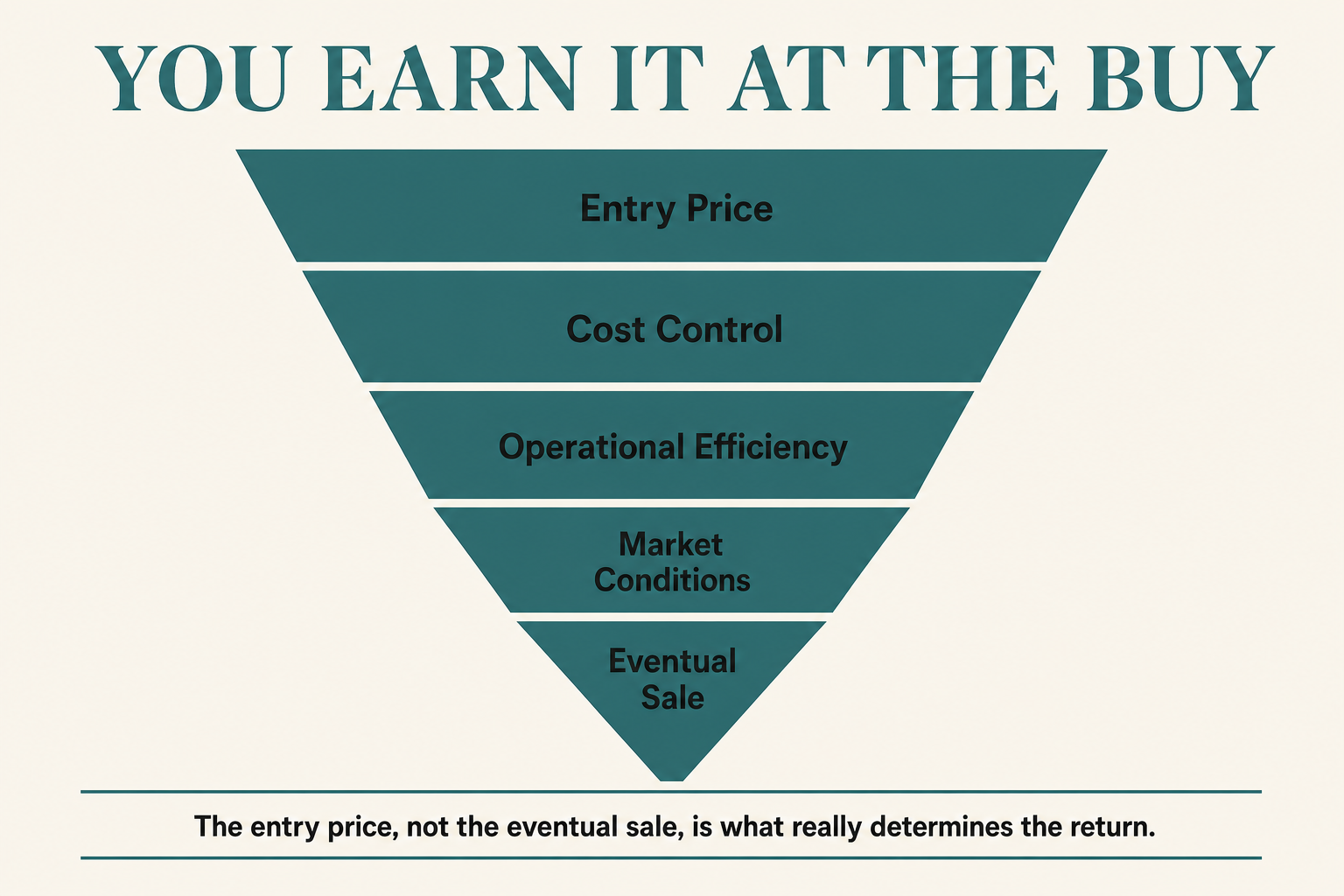
So the real skill is not the model. Anyone can build a model that works; you just adjust the rent growth until it does. The skill is knowing which number lets you walk away whole and refusing to pay above it, especially when the room wants you to.
Because the pressure runs one direction. The broker is paid on the close. Your own time is sunk in the diligence. The deal feels alive, and killing it feels like loss. Every force in the room pushes the price up and the discipline down.
Discipline is not finding the right deal. It is walking from the wrong one after you have fallen for it.
This is why the patient buyer wins over a cycle. Not because they are smarter about operations, but because they let most things go. They set a number, they hold it, and they accept that walking away is the move they will make most often. The good entry is rare on purpose. If it were common, it would not be the edge.
Where We Refused To Spend, And Where We Did Not
The same logic runs the other way when you build.
On the property we developed near Round Top, the decisive choices happened before a single finish was chosen. We did not start with how many bedrooms we could fit. We started with how a group actually moves through a weekend. Where they gather. Where someone drinks coffee alone in the morning. Where everyone lands at sunset.
That drove the large shared spaces, the sightlines, the pool area, the scale. None of it was the cheap way to build. Big common rooms and strong outdoor connection do not maximize square footage per dollar. They cost more upfront, and they are exactly what a guest feels without being able to name it.
We spent on real materials where weight and texture mattered, so the place read as permanent instead of themed. And we refused the easy version: a big house, trendy furniture, good photography, call it a ranch retreat, move on. That path makes a commodity that depends on the listing photos and falls apart on arrival.
The cost discipline was not "spend less." It was knowing what the asset could never recover if we cut it.
Some costs you can value-engineer away. The ones that create the difference, you cannot put back later.
A buyer overpaying for a building and a builder cutting the wrong cost are making the same error in opposite directions. Both are misjudging the one decision that locks the outcome. One pays too much going in. The other saves money on the exact thing that justified the price.
How To Tell If The Number Is Wrong
Before you sign, before you cut, run the deal against questions that surface the trap instead of the spreadsheet.
- Does the model only work at the top of your assumptions? If it needs your best-case rent growth to clear, you are buying the forecast, not the asset.
- What surprise would break this deal? Name the roof, the vacancy, the slow quarter. If a normal surprise is fatal, the entry price already failed.
- At what number do you walk, and have you written it down? A walk-away price you set before you fell for the deal is the only one you will trust later.
- Who in this room is paid only if it closes? Their advice is honest and also not neutral. Weigh it accordingly.
- If you are building, which cut would the guest feel? Some savings are invisible. Some quietly remove the reason anyone pays a premium.
- Would you still want this if you had to hold it twice as long as planned? Time exposes a thin entry price. Plan for the slow version.
- Is walking away on the table at all? If it is not, you are not negotiating. You are committing and calling it diligence.
The work of buying well is mostly the work of saying no, and the discipline is finished before the operation begins.
You can fix a tenant, a manager, a finish, a marketing plan. You cannot fix the price after you have paid it. So the answer arrives at the front, in the one number you are most tempted to round up.