The setting
MisterArt.com sold art supplies online in 1996, when online shopping was still unfamiliar territory for many customers and there was no settled e-commerce playbook to follow.
The real problem
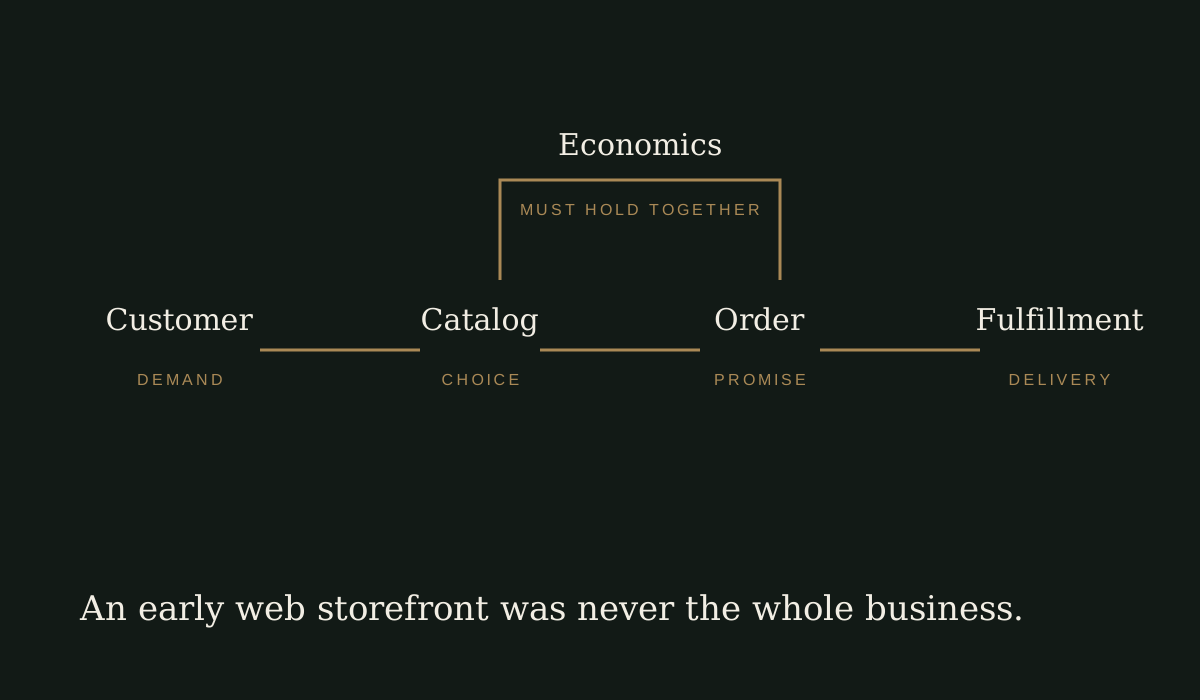
A website could make a catalog visible. It could not, by itself, make the offer clear, preserve trust, turn an order into a dependable promise, or make the economics work. Those were operating questions, not software features.
How the work was approached
The work required reasoning from first principles: what a customer needed to understand, what had to happen after an order was placed, and where the business could fail even when the idea attracted attention. Customer experience, fulfillment, and commercial discipline had to work as one system.
The tradeoff
Being early offered attention, but it also meant building without the shortcuts that later became standard. The right response was not to chase novelty for its own sake; it was to keep testing whether the new channel could support a real operating business.
What endured
The experience became an early lesson in separating a visible innovation from the less visible work that makes it durable. A new channel changes how a business can reach customers. It does not excuse the business from earning the right to keep them.
First-mover attention is not an operating model.